比特币矿池
矿池汇集数千名矿工的算力,更频繁地找到区块并按比例分配奖励。
什么是矿池?
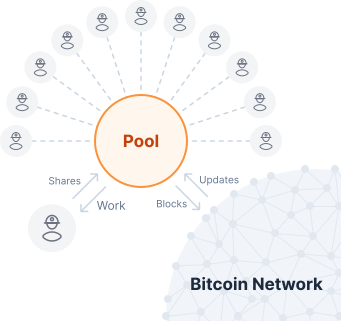
使用单台 ASIC 单独挖矿就像买一张彩票——在当前难度下,一台 Antminer S21 XP 平均需要约 65 年才能找到一个区块。矿池让数千名矿工合并算力,更频繁地找到区块,并根据每个矿工的贡献按比例分配奖励。
超过 95% 的比特币区块是通过矿池挖出的。大多数矿工每天获得小额、可预测的收益,而不是等待可能永远不会到来的大奖。
矿池挖矿的工作原理
从连接矿机到获得区块奖励份额。
连接矿机
使用矿池的 Stratum URL 和您的钱包地址配置 ASIC。矿机连接后开始接收工作。

提交份额
您的矿机解决称为"份额"的部分工作量证明难题。每个份额证明您的硬件在工作并做出贡献。
矿池找到区块
当矿池中的任何矿工找到有效区块时,矿池提交该区块并获得奖励(目前为 3.125 BTC 加手续费)。

什么是份额?
份额是您的矿机正在进行真实工作的证明。它是一个满足比实际区块目标更低难度阈值的哈希值——更容易找到但仍然数学上有效。矿池跟踪所有矿工的份额,以计算每个矿工在奖励中的按比例贡献。
矿池费用和运气
矿池收取挖矿奖励的 0-4%。更低的费用不一定更好——要考虑可靠性、支付方式和过往记录。"矿池运气"意味着区块有时来得比平均更快或更慢。一些支付方式为您吸收这种波动;其他方式则将波动传递给您。
份额难度和波动
当您的矿机连接到矿池时,矿池为其分配"份额难度"——一个比实际比特币网络难度容易得多的目标。2026 年网络难度超过 100 万亿,而矿池可能分配的份额难度仅为几十亿。
这意味着您的矿机可以频繁提交份额(每几秒到几分钟),提供细粒度的工作证明。矿池跟踪所有提交的份额来计算每个矿工的按比例贡献。
矿池运气对短期收入有重大影响。当矿池比平均速度更快地找到区块时为"幸运",当区块花更长时间时为"不幸运"。长期来看,运气大约平均为 100%,但在任何给定的一周内,矿池可能处于 80% 或 120% 的运气值。
这种波动是支付方式很重要的原因。FPPS 和 PPS+ 矿池吸收运气波动——无论矿池运气如何,它们按每份额固定费率支付。PPLNS 矿池将波动传递——在幸运时期您赚得更多,不幸运时期赚得更少。
比特币矿池对比
按支付方式、费用和功能比较所有主要矿池。

Formerly Slush Pool — the world's first Bitcoin mining pool (est. November 2010). Pioneer of Stratum V2 protocol for decentralized block template construction. Offers both FPPS (2% fee) and PPLNS (0% fee) payout options.
- 支付方式
- FPPS, PPLNS
- 费用
- 2% FPPS / 0% PPLNS


The largest Bitcoin mining pool, controlling roughly 30% of network hash rate. Backed by Digital Currency Group (DCG). Institutional focus with compliance-first operations and deep relationships with North American miners.
- 支付方式
- FPPS
- 费用
- 0%
AntPool
Operated by Bitmain, the world's largest ASIC manufacturer. Second-largest pool with roughly 18% of network hash rate. Strong presence in China and international markets.
- 支付方式
- FPPS, PPLNS
- 费用
- 2.5% FPPS / 0% PPLNS

Independent pool operator with roughly 13% of network hash rate. Offers the widest range of payout methods including PPS+, PPLNS, and solo mining. Particularly strong in Russia and surrounding regions.
- 支付方式
- PPS+, PPLNS, SOLO
- 费用
- 4% PPS+ / 2% PPLNS


Fast-growing pool with roughly 9% of network hash rate. Focuses on institutional miners with competitive FPPS payouts and stable infrastructure. Relatively new but expanding rapidly.
- 支付方式
- FPPS
- 费用
- FPPS
MARA Pool
Vertically integrated pool operated by Marathon Digital Holdings (NASDAQ: MARA), a publicly traded Bitcoin mining company. Private pool — not open to external miners. Controls roughly 6% of network hash rate.
- 支付方式
- FPPS
- 费用
- N/A
Luxor
US-based pool with roughly 3% of network hash rate. Offers integrated firmware (LuxOS), hashrate derivatives platform, and fixed/upfront payout options beyond standard FPPS. Also provides miner financing.
- 支付方式
- FPPS
- 费用
- 0%
Exchange-integrated mining pool operated by Binance, the world's largest crypto exchange. Controls roughly 2% of network hash rate. Miners benefit from seamless integration with Binance's trading and financial ecosystem.
- 支付方式
- FPPS
- 费用
- 0.5%
Small, community-run pool operating since 2014. Uses the CKPool open-source mining software. Low fees and PPLNS payouts appeal to miners who prioritize decentralization.
- 支付方式
- PPLNS
- 费用
- 0.9%
Solo mining pool — you get the full block reward (3.125 BTC) if your miner finds a block, or nothing. Maximum variance, maximum reward. Popular with Bitaxe and small ASIC hobby miners chasing a solo block find.
- 支付方式
- SOLO
- 费用
- 2%
Cipher Mining
Formerly Bitfury. US-based publicly traded Bitcoin mining company (NASDAQ: CIFR) operating a private pool. Not open to external miners.
- 支付方式
- N/A
- 费用
- N/A
任何单个矿池都不应控制超过全网 25% 的算力。选择矿池时,考虑选择中型或较小的矿池以支持比特币的去中心化。网络的健康依赖于算力分布在众多独立运营商之间。
矿池支付方式详解
矿池如何计算和向参与者分配挖矿奖励。
FPPS
Full Pay Per Share
Pays miners for both the block subsidy and an estimated share of transaction fees, per share submitted. Offers the most predictable income — the pool absorbs all variance risk. Higher fees compensate the pool for this risk.
Foundry USA, F2Pool, AntPool, SpiderPool, Luxor, Binance Pool
PPS+
Pay Per Share Plus
Hybrid approach — pays a fixed rate per share for the block subsidy (like PPS), plus distributes transaction fees using a PPLNS method. Slightly less predictable than FPPS but potentially higher payouts when the pool is lucky.
ViaBTC, F2Pool
PPLNS
Pay Per Last N Shares
Rewards are distributed based on shares submitted in a window around when a block is found. Pays more when the pool is lucky, less when unlucky. Lowest fees (often 0%) but highest variance. Miners must stay connected consistently.
Braiins Pool, AntPool, ViaBTC, Kano CKPool
TIDES
Transparent Index of Distinct Extended Shares
Ocean's proprietary transparent payout system. Tracks work in a rolling window equivalent to the last 8 blocks worth of network difficulty. Each payout is fully auditable and paid directly via coinbase transactions — no withdrawal process needed.
Ocean
SOLO
Solo Mining
The pool coordinates work but you receive the entire block reward (currently 3.125 BTC) if your miner finds a block. No reward sharing. Maximum variance — could take years to find a block with a single ASIC, but the full reward is yours.
Solo CKPool, ViaBTC (solo option)
这些支付方式曾被早期比特币矿池使用,但目前已不再被主流矿池使用。
PPS (Pay Per Share): Pays a fixed amount for each valid share submitted, based only on the block subsidy (ignoring transaction fees). The pool absorbs all luck variance. Largely replaced by FPPS which also includes transaction fee revenue.
PROP (Proportional): Distributes the block reward proportionally among all miners based on shares submitted during the round. Simple but vulnerable to pool-hopping — miners could jump in right before a block was found.
DGM (Double Geometric Method): Hybrid approach where the pool operator absorbs some risk by receiving a portion of payouts during short rounds and returning it during longer rounds. Designed to normalize payments and reduce variance.
BPM (Bitcoin Pooled Mining): Also known as Slush's method. Older shares from the beginning of a round are weighted less than recent shares. This reduced the incentive for pool-hopping by making late-round shares more valuable.
SCORE (Score-Based): Rewards are weighted by the time work was submitted. Later shares in a round are worth more than earlier ones. Similar intent to BPM — discouraging pool-hopping.
SMPPS (Shared Maximum Pay Per Share): Similar to PPS but the pool never pays out more than it has earned. Protects the pool from going bankrupt during unlucky streaks by capping payouts at available balance.
ESMPPS (Equalized Shared Maximum Pay Per Share): Variant of SMPPS that distributes available funds equally among all miners rather than prioritizing any group.
RSMPPS (Recent Shared Maximum Pay Per Share): Variant of SMPPS that prioritizes the most recent miners first when distributing available funds.
CPPSRB (Capped Pay Per Share with Recent Backpay): Uses a maximum PPS system that pays miners as much as possible from block-finding income without going bankrupt. Unpaid balances carry forward to future rounds.
POT (Pay on Target): High-variance PPS variant that pays based on the difficulty of work returned by the miner rather than the pool's overall difficulty. Rewards miners who submit higher-difficulty shares more generously.
如何选择矿池
合适的矿池取决于您的运营规模、风险承受能力和优先事项。
家庭矿工(1-3 台 ASIC)
在家运行矿机用于教育、供暖或小规模收入。
- 寻找稳定的按份额支付,使收入日复一日可预测
- 当您的算力较小时,低最低支付门槛很重要
- 简单的设置,清晰的文档和标准 Stratum 支持
- 考虑选择较小的矿池以帮助保持比特币去中心化
小型矿场(3-50 台 ASIC)
需要可靠、可规划现金流的专用挖矿运营。
- 可预测的收入对于覆盖电费和托管费至关重要
- 费用透明——准确了解您支付了什么以及为什么
- 正常运行时间和可靠性比微小的费用差异更重要
- 加密连接和安全功能保护您的收益
工业运营(50+ 台 ASIC)
需要企业级基础设施的大规模挖矿。
- API 访问、SLA 和专用支持用于矿场集成
- 按规模协商的定制费率和支付计划
- 将算力分散到多个矿池以降低风险
- 司法管辖权和监管合规考虑
您的矿池选择影响比特币的去中心化
矿池构建区块模板,决定哪些交易被包含在区块链中。当您将算力指向一个矿池时,您就在认可他们对交易选择和协议规则的选择。
两个矿池——Foundry USA 和 AntPool——通常控制着全网约 50% 的算力。这种区块构建能力的集中是矿池挖矿最大的权衡。
Stratum V2 通过让单个矿工构建自己的区块模板而不是依赖矿池运营商来解决这个问题。Braiins Pool 原生支持 Stratum V2,Ocean 使用 DATUM 协议实现矿工端模板构建。
矿工可以做什么
- 运行一个完整的比特币节点以独立验证区块
- 选择支持 Stratum V2 的矿池以实现矿工端区块构建
- 将算力分散到较小的矿池以减少中心化
- 通过 mempool.space 等区块浏览器监控矿池行为
协议升级和矿工信号
SegWit 于 2017 年 8 月激活,Taproot 于 2021 年 11 月激活。两者都需要矿工信号——矿池运营商在区块头中设置特定位以表示准备就绪。当达到一定阈值的区块(通常为 90-95%)发出支持信号时,升级即被激活。这赋予了矿池对哪些协议变更被采纳的重大影响力。
为什么运行全节点很重要
全节点独立验证每个区块和每笔交易是否符合比特币的共识规则。没有全节点,您只能信任矿池告诉您的区块链状态。运行节点确保即使您的矿池包含无效交易,您的节点也会拒绝这些区块。
全节点选项包括 Bitcoin Core(参考实现)、Bitcoin Knots(带有额外过滤功能的增强版)和 btcd(Go 语言实现)。
常见问题
关于比特币矿池的常见问题。
什么是比特币矿池?
矿池是一群矿工将计算能力合并在一起,更频繁地找到区块并按比例分配奖励。矿池矿工无需等待数年才能独立出块,而是根据其贡献获得小额、可预测的收益。
矿池支付如何运作?
矿池跟踪您的"份额"——证明您的算力贡献的部分工作量证明解决方案。当矿池找到区块时,奖励根据提交的份额分配。支付方式(FPPS、PPLNS 等)决定了您的确切支付方式和时间。
哪种支付方式最好?
FPPS 提供最可预测的收入——无论矿池运气如何,您按每份额固定费率获得支付,包括预估交易费。PPLNS 费用更低但日常波动更大。对于大多数矿工来说,FPPS 提供了可预测性和简便性的最佳平衡。
可以不加入矿池挖比特币吗?
可以,但使用单台 ASIC 单独挖矿极不可能盈利。在当前难度下,一台 Antminer S21 XP 平均需要约 65 年才能找到一个区块。Solo CKPool 等单独挖矿服务存在,供想要碰运气赢取完整 3.125 BTC 区块奖励的业余矿工使用。
矿池费用如何运作?
矿池收取挖矿奖励的 0-4%。基于 PPS 的矿池(FPPS、PPS+)通常收取 2-4%,因为它们为您吸收运气波动。PPLNS 矿池通常收取 0-2%,因为矿工承担波动风险。更低的费用不一定意味着更高的收入——可靠性和正常运行时间也很重要。
矿池选择是否影响比特币的去中心化?
是的。矿池运营商决定哪些交易进入区块。当少数大型矿池控制大部分算力时,区块构建能力就被集中了。您可以通过选择较小的矿池、使用支持 Stratum V2 的矿池以及运行自己的比特币全节点来帮助改善这一状况。